How to Teach Kaitiakitanga Through Play: A Papatūānuku Tuff Tray Invitation
When we think about teaching kaitiakitanga, it's easy to jump straight to recycling bins, gardening projects, or picking up rubbish.
While those things certainly have their place, kaitiakitanga begins much deeper than that.
Before tamariki can care for the environment, they need to feel connected to it.
They need opportunities to wonder, explore, build relationships with the natural world, and understand that they are part of something bigger than themselves.
One simple way to support this learning is through a Papatūānuku tuff tray invitation.
Inspired by our Ngā Atua Cards Resource, this invitation combines sensory play, storytelling, and te ao Māori perspectives to help tamariki explore their connection to te taiao in a meaningful and engaging way.
What is Kaitiakitanga?
Kaitiakitanga is often translated as guardianship or stewardship, but its meaning goes much deeper.
At its heart, kaitiakitanga is about relationships.
It recognises that people, land, water, plants, animals, and the natural world are all connected through whakapapa.
When tamariki begin to understand these connections, caring for te taiao becomes a natural response rather than a rule they have to follow.
Teaching kaitiakitanga isn't simply teaching children to protect nature.
It's helping them develop a sense of belonging, responsibility, respect, and reciprocity with the world around them.
Why Papatūānuku is the Perfect Starting Point
Papatūānuku, the Earth Mother, is central to many Māori creation stories and provides a powerful foundation for exploring environmental learning with tamariki.
She is the land beneath our feet, the forests, rivers, mountains, and all living things that grow from her.
Through the story of Papatūānuku, tamariki can begin to understand:
-
Our connection to the natural world
-
The importance of caring for living things
-
How all things are interconnected
-
The role of kaitiaki in protecting te taiao
Using pūrākau to introduce these concepts allows children to engage with big ideas in a way that feels accessible, meaningful, and memorable.
Bringing the Learning to Life with Ngā Atua
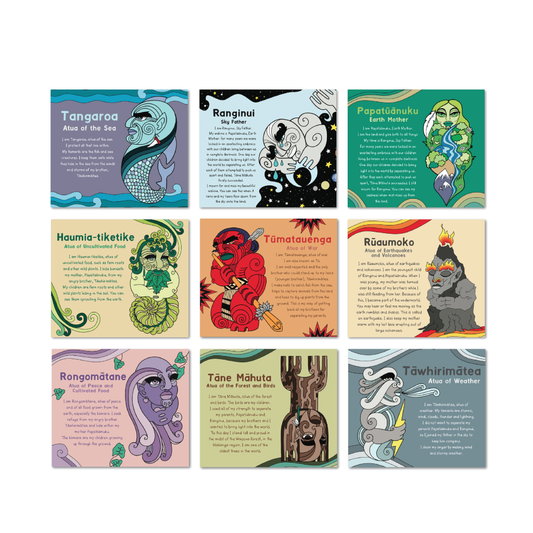
Our Ngā Atua Cards Resource is designed to help kaiako introduce atua Māori through storytelling, discussion, and play.
The resource includes beautifully illustrated atua cards, bilingual clues, information about each atua, and the pūrākau of Ranginui and Papatūānuku.
Before setting up your tuff tray, you might:
-
Read the story of Ranginui and Papatūānuku together
-
Explore the Papatūānuku card as a group
-
Discuss what tamariki already know about the earth, nature, and caring for te taiao
-
Introduce key te reo Māori vocabulary connected to the activity
The tuff tray then becomes an opportunity for tamariki to bring the learning to life through play.
As children create rivers, forests, mountains, and habitats, they are revisiting and extending the concepts introduced through the cards, helping deepen their understanding of te ao Māori, kaitiakitanga, and their connection to the natural world.
A Simple Papatūānuku Tuff Tray Invitation
This invitation uses natural materials to create a sensory-rich environment that encourages exploration, storytelling, and discussion.
What You'll Need
-
Soil or potting mix
-
Moss
-
Leaves
-
Bark
-
Stones and pebbles
-
Sticks and branches
-
Blue fabric or ribbon to represent an awa
-
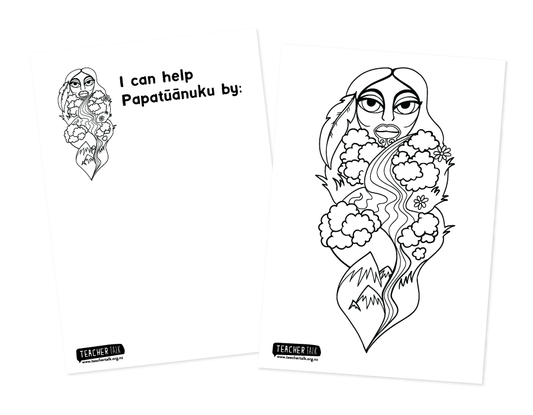
A Papatūānuku card or story prompt
Invite tamariki to help build the landscape.
They might create rivers, forests, mountains, gardens, or habitats for native animals.
There is no right or wrong way to construct the tray. The magic lies in the conversations, ideas, and stories that emerge through play.
Questions to Deepen Learning
Open-ended questions can help extend children's thinking and encourage meaningful kōrero.
Try asking:
-
Who is Papatūānuku?
-
What does Papatūānuku provide for us?
-
What do you notice when you're outside?
-
How do we care for the land?
-
What happens when we look after nature?
-
What makes someone a good kaitiaki?
-
How are people, animals, plants, and water connected?
These discussions help children move beyond identifying environmental features and towards understanding their relationship with them.
How This Supports Te Whāriki
Activities like this align naturally with several strands of Te Whāriki.
Belonging | Mana Whenua
Tamariki develop a sense of connection to the places, environments, and communities around them.
Exploration | Mana Aotūroa
Children investigate, discover, imagine, and make sense of the world through hands-on experiences.
Communication | Mana Reo
Storytelling, questioning, describing, and sharing ideas all support language development and communication skills.
Contribution | Mana Tangata
Tamariki learn that they have a role to play within their environment and community.
Wellbeing | Mana Atua
Developing a connection with nature supports children's sense of well-being, identity, and belonging.
Extending the Learning Beyond the Tuff Tray
The beauty of this invitation is that it can spark learning experiences that continue long after the tray has been packed away.
Explore Your Local Environment
Go on a nature walk around your centre, school, or community.
What signs of Papatūānuku can tamariki find?
Create a Kaitiaki Project
Work together to care for a garden, compost system, native planting area, or local outdoor space.
Learn About Native Species
Investigate the birds, insects, trees, and plants that call Aotearoa home.
Collect Natural Treasures
Invite tamariki to gather leaves, seed pods, bark, stones, and other natural materials to add to future play invitations.
Explore Other Atua Māori
Extend learning by introducing atua connected to different parts of the natural world, helping tamariki understand the interconnectedness of te ao Māori.
Why Play Matters
We obviously don't need to explain this to you as kaiako, but for others reading, perhaps whānau, play allows tamariki to explore complex ideas in ways that feel meaningful and accessible.
When children can touch, build, imagine, question, and create, learning becomes something they experience rather than simply something they are told.
A Papatūānuku tuff tray may look like a simple play invitation, but it opens the door to rich conversations about identity, connection, responsibility, and care for the world around us.
Through play and storytelling, tamariki develop an understanding of their role as kaitiaki, learning how all living things are connected through whakapapa and the natural world.
And that is where meaningful environmental learning begins.
Explore Our Ngā Atua Cards
Looking for more ways to bring Te Ao Māori into your learning environment?
Our Ngā Atua Cards Resource helps kaiako introduce atua Māori through storytelling, discussion, visual prompts, and hands-on learning experiences.
Perfect for mat times, provocations, small group learning, tuff trays, and exploring concepts such as kaitiakitanga, whakapapa, and our connection to te taiao.
Because some of the most powerful learning happens when stories move beyond the page and into play.